|
|
|
|
|
|
||
Dissecting a C# Application: Inside SharpDevelop |
|||||||||||||||||||||||||

|
|
||||||||||||||||||||||||
Practical Intranet Development |
|||||||||||||||||||||||||

|
|
||||||||||||||||||||||||
C# Threading Handbook |
|||||||||||||||||||||||||
|
|
||||||||||||||||||||||||
Professional C# (2nd Edition) |
|||||||||||||||||||||||||
|
|
||||||||||||||||||||||||
Professional ASP.NET Web Services |
|||||||||||||||||||||||||
|
|
||||||||||||||||||||||||
Professional WAP |
|||||||||||||||||||||||||
|
|
||||||||||||||||||||||||
| Wireless Application Protocol (WAP) and its related technologies are emerging as the standard way of creating network-wise software for wireless computing devices, such as mobile telephones. Wrox Press's crack team of programmer-writers have put together a winner in Professional WAP. To a greater extent than any other WAP book on the market, this volume shows its readers how to do real work by using WAP, Wireless Markup Language (WML), WMLScript, and various toolkits and servers that ease wireless application development. Best of all, the authors realize that most folks working as WAP developers have Web roots; they explain their subjects in terms that anyone with a bit of HTML and Web-scripting (JavaScript or VBScript) background should be able to follow easily. Aside from the overview sections that explain WAP technologies in broad terms, this book focuses on code. Readers see software literally "develop" through the course of each chapter, as the authors start out with a relatively simple illustration and build on it, adding features and demonstrating capabilities as they go along. Generally high-grade commentary accompanies the evolving code, so this book proves almost as useful away from the development workstation as at it. Overall, the book earns its price with its in-depth coverage of such important, firm standards as WMLScript, supplemented by less detailed--but still useful--attention to such ancillary technologies as VoiceXML. --David Wall Topics covered: Development of software for mobile telephones and other portable devices with Wireless Application Protocol (WAP), Wireless Markup Language (WML), WMLScript, Active Server Pages (ASP), ColdFusion, Java, and other languages and technologies. Task-oriented sections deal with the specifics of working with e-mail in WAP applications, integration of WAP with Lightweight Directory Access Protocol (LDAP), and content pushing. |
|||||||||||||||||||||||||
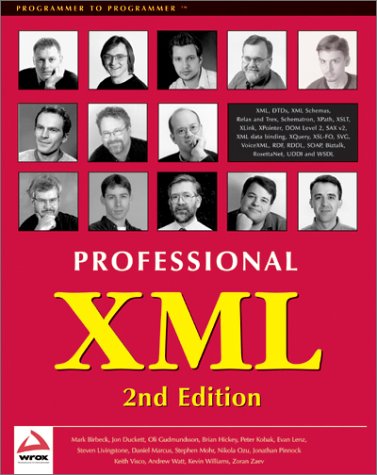
Professional Xml (Programmer to Programmer): 2nd Edition |
|||||||||||||||||||||||||
|
|
||||||||||||||||||||||||
| Professional XML is aimed toward seasoned Web or general application developers as a guide for developing sophisticated, real-world XML solutions. It successfully meets the most pressing need for programmers new to XML by putting all of the various component technologies into clear context. The near boundless potential of XML also means there is much ground to cover, and this book cuts no corners in taking the reader through the network of technologies, exploring both the presentation and data exchange applications of XML. This second edition represents the current state of the ever-evolving set of XML standards, particularly the momentum toward XML Schemas. The first couple of chapters compose an excellent XML introduction and the basic language syntax. Then the various authors delve into the individual components of XML such as document type definitions (DTD), XML Schemas, XPath, and XSLT. Most of the chapters include some concrete examples of how to implement the techniques in question. Late in the book, a full-fledged case study serves as an excellent compilation of several aspects of XML. The book goes beyond the basics of XML to give the reader a glimpse of the still unknown potential of the technology. A fascinating chapter on Schema Based Programming (SBP)--an experimental coding technique--adds a degree of excitement to the learning process and is sure to spark innovation in any creative programmer. Professional XML is another seminal work from Wrox. It should be required reading for anyone looking to become an XML guru. --Stephen W. Plain Topics covered: <ul><li>XML introduction <li>Document type definitions <li>XML Schemas <li>XML-Data Reduced (XDR) <li>Validation tools <li>XPath <li>XSLT <li>XLink <li>XPointer <li>Fragments <li>Document Object Model (DOM) <li>Simple API for XML version 2 (SAX2) <li>Schema Based Programming (SBP) <li>Data modeling <li>XML data binding <li>VoiceXML <li>XSL-FO <li>RDF <li>SOAP <li>Microsoft BizTalk and B2B solutions</ul> |
|||||||||||||||||||||||||
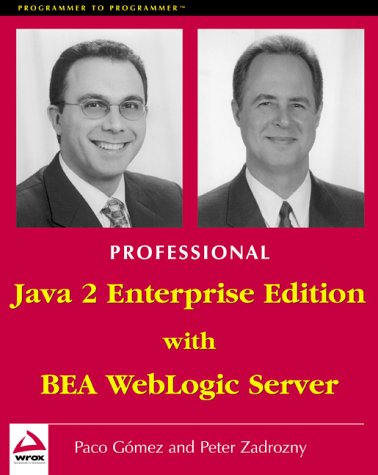
Professional J2EE Programming with BEA WebLogic Server |
|||||||||||||||||||||||||
|
|
||||||||||||||||||||||||
| Despite its wordy title, Professional Java 2 Enterprise Edition with BEA WebLogic Server actually is one of the better books that you can get for learning JSP-based programming with Java and Enterprise JavaBeans (EJBs). By highlighting practical matters--including setting up and running the popular BEA WebLogic Server, and benchmarking performance--the authors manage to cover the essentials of EJB-based development in a friendly and intelligent style that's ideal for any aspiring Java EJB developer. The focus on hands-on matters begins with installation and configuration of BEA WebLogic Server, one of the more widely used platforms for running EJB applications. Most books cover EJBs more theoretically and leave deployment by the wayside. By focusing on an actual EJB product, the authors can talk about what works and what doesn't work in real applications. For examples, a single case study for a chain of pizza shops gets enhanced in stages, first with a Web front end for ordering pizzas, then with other features--including call-center support, e-mail, and XML. A section on converting an ASP version of a front end for this sample application into a JSP version is a highlight. The latter half of this text turns into a primer on benchmarking. A benchmark (called the Grinder) measures performance, with a wide range of choices for EJBs that run on WebLogic. Different Java Virtual Machines (JVMs) and choices for implementing the applications (for example, stateful vs. stateless EJBs) are tested, and the numbers of concurrent users (up to 400) are varied. The result is a solid glimpse into the choices that give the best performance on WebLogic. Besides covering the basics of building e-commerce applications with JSPs and EJBs, this book has a genuinely practical side. The case study is very useful, as is the plentiful performance advice. Smart, friendly, and well organized, this title strikes an excellent balance between presenting information on some of the latest Java technology and APIs, and showing just how to do it on a real EJB platform and with real code. --Richard Dragan Topics covered:<ul><li>Introduction to Java 2 Enterprise Edition (J2EE) <li>Getting started with BEA WebLogic Server: features and administration <li>"Webifying" existing applications <li>Introduction to JavaServer Pages (JSPs) <li>Overview of BEA dbKona and htmlKona for simpler JSP/servlet development <li>JSP architectures (Model 1 and Model 2) <li>Using Enterprise JavaBeans (EJBs) <li>Session beans, including stateless session beans <li>Entity beans (container-managed and bean-managed persistence) <li>Converting ASPs to JSPs <li>Sending e-mail and the Java Message Service <li>Security issues for Web applications, including authentication, SSL, and authorization <li>Introduction to Wireless Markup Language (WML) and wireless applications <li>Stress-testing performance for Web applications <li>Grinder (custom benchmark for performance testing) <li>Comparative benchmark scores (comparing JVMs, stateful and stateless beans, entity beans, and clustering options for up to 400 users) <li>Case study for chain of pizza shops with e-commerce features and call centers <li>JSP syntax reference</ul> |
|||||||||||||||||||||||||
Professional ADO.NET with VB.NET |
|||||||||||||||||||||||||
|
|
||||||||||||||||||||||||
Professional WebObjects with Java |
|||||||||||||||||||||||||
|
|
||||||||||||||||||||||||
Total:( 18 )
Page:(
1 /
2 ) |
    |
|
|
|
Copyright © 2002 - 2008 iTePub.Group All Rights Reserved |